

Political competition is an essential part of democracy. It allows citizens to choose between competing ideas, programmes and visions for the future. But competition should never come at the cost of peace, dignity or the social bonds that hold communities together.
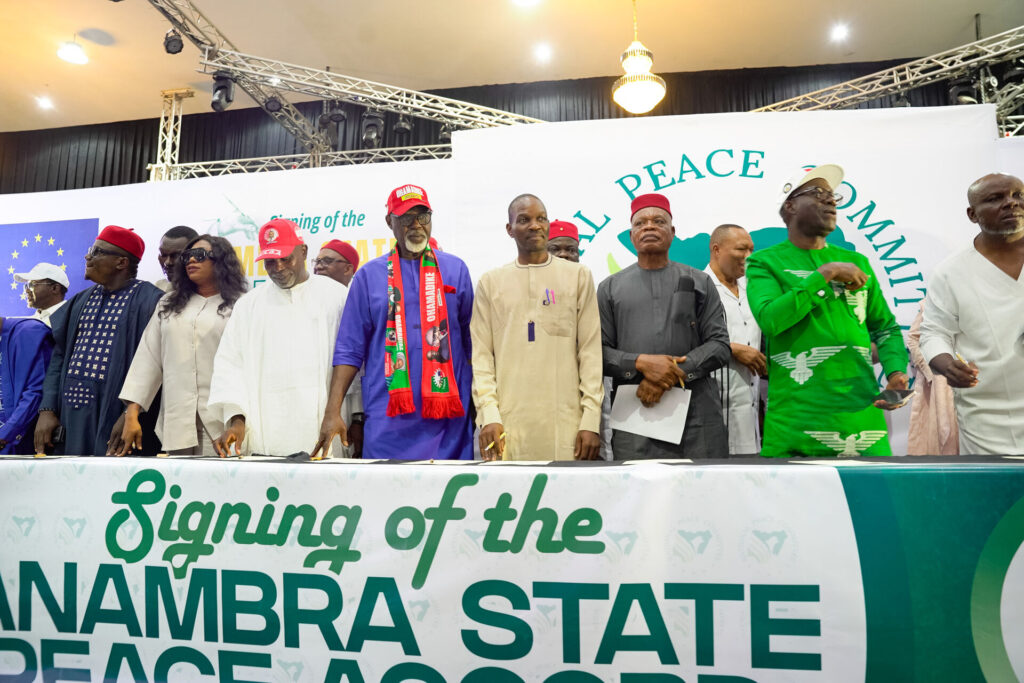
It was against this backdrop that political parties and gubernatorial candidates contesting the 2027 election in Adamawa State came together to sign the Adamawa Peace Accord, committing themselves to peaceful, responsible and issue-based political competition before, during and after the elections.
The Summit was convened by the ABAK Peace Foundation, in collaboration with the National Peace Committee (NPC) and the Adamawa State Peace, Conflict Resolution and Social Integration Commission (Adamawa State Peace Commission). It brought together political party leaders and candidates, government and elected officials, traditional and religious leaders, electoral and security institutions, civil society organisations, the media and other stakeholders committed to a peaceful electoral process.


Putting Peace Before Political Ambition
In a goodwill message delivered by Fr. Atta Barkindo, Ph.D., Executive Director of The Kukah Centre and Head of Secretariat of the National Peace Committee, on behalf of the Chairman of the NPC, General Abdulsalami A. Abubakar, GCFR, the Committee emphasised a simple but fundamental principle: the peace and stability of Adamawa State must take precedence over individual political ambitions.
Reflecting on the intensity of previous electoral contests in the state, the message urged political actors to recognise the influence of their words and conduct, particularly as campaigns gather momentum.
“Political competition is a legitimate part of democracy. However, violence is not. Intimidation is not. Incitement is not.”
In a state with diverse ethnic, religious and social communities, political disagreements must not be allowed to become a source of community division. Political leaders, candidates and campaign managers were therefore encouraged to use decent and civil language, focus their campaigns on issues of governance and development, respect opposing views and approach political disagreements with maturity and within the framework of the law.


The Accord Is More Than a Signature
A Peace Accord derives its value not simply from the ceremony at which it is signed, but from the conduct that follows.
The Accord represents a public commitment by political parties and candidates to take responsibility for the conduct of their campaigns, supporters and political organisations. Under the agreement, political actors committed to rejecting electoral violence, hate speech, ethnic and religious incitement, intimidation, threats, misinformation, disinformation and personal attacks.
They also committed to making their campaigns about policies, programmes and visions for the development of Adamawa State, while respecting the outcome of the electoral process and pursuing lawful means to resolve or contest electoral disputes.
As Fr. Barkindo emphasised:
“The signature is only the beginning. The real test of an Accord is what happens after the signing, during campaigns, at rallies, on election day, during collation and when results are announced.” This is at the heart of the Accord. The expectation is not that political competition will disappear, but that it will be conducted responsibly. Candidates can disagree strongly on policies and priorities without turning those disagreements into personal attacks, intimidation or violence.


Making Issue-Based Politics the Standard
For the people of Adamawa, an issue-based campaign offers an opportunity to shift attention towards the questions that matter most to their daily lives and the future of the state.
Political actors have an opportunity to place their policies, programmes and development priorities before the electorate and allow citizens to assess competing visions for Adamawa.
The responsibility for creating this environment, however, does not rest with candidates alone.
Speaking at the Summit, the President and Founder of the ABAK Peace Foundation, Amb. Bernard A. Kaigama, called on traditional and religious leaders, security agencies, civil society organisations, the media, youth and women’s groups and the wider electorate to play their part in sustaining peace throughout the electoral cycle.
The Commissioner of Police, Adamawa State Command, CP Kabir Umar Hassan, who led members of the Inter-Agency Consultative Committee on Election Security (ICCES) to the event, similarly urged political parties, candidates and their supporters to remain law-abiding and avoid violence, hate speech, vote-buying, intimidation and other conduct capable of undermining peace. He reaffirmed the commitment of security agencies to providing a secure environment for political activities.


Peacebuilding Before Crisis
The signing of the Adamawa Peace Accord reflects an important principle in peacebuilding: preventing conflict is as important as responding to it.
Peace should not become a priority only when political tensions have escalated or violence has already occurred. It requires sustained dialogue, engagement, early attention to emerging tensions and the willingness of political and community leaders to act before disagreements become crises.
The Accord provides a framework for continued engagement as the electoral process unfolds. Its commitments will require the attention of political actors, institutions, civil society, the media, community leaders and citizens alike.
From Abuja to Adamawa
The Adamawa Peace Accord builds on the National Peace Accord signed in Abuja on 19 August 2026 by political parties and presidential candidates ahead of the 2027 General Elections.
The state-level Accord provides an opportunity to translate that broader national commitment into the context of Adamawa State, where political actors and stakeholders can collectively work towards an electoral process that protects lives, respects democratic choices and strengthens social cohesion.
Ultimately, the measure of the Accord will not be the number of signatures secured or the ceremony that marked its signing. It will be seen in the choices political actors make throughout the electoral cycle: the words they use, the issues they campaign on, how their supporters conduct themselves, how they respond to disagreement, and how they react when results are announced.
The commitment has been made. The responsibility now is to live by it.
For Adamawa, the goal is clear: a political process where ideas can compete without violence, differences can be managed without division, and citizens can exercise their democratic choices freely, safely and without fear.