

As Ekiti State prepares for the June 20, 2026 Governorship Election, political parties, governorship candidates, electoral institutions, security agencies, traditional rulers, religious leaders, civil society organisations, development partners, and the media gathered in Ado-Ekiti to reaffirm commitment to peace, democratic accountability, and credible elections.
At the centre of this collective commitment was the signing of the Ekiti State Peace Accord, convened by the National Peace Committee (NPC) through its Secretariat, The Kukah Centre, as part of ongoing efforts to promote peaceful, inclusive, and violence-free electoral processes across Nigeria.
The signing ceremony, held at the AB Foundation Civic Centre, Ado-Ekiti, brought together all thirteen political parties participating in the forthcoming governorship election and their candidates, who publicly pledged to conduct issue-based campaigns, reject violence, respect democratic institutions, and uphold the outcome of a credible electoral process.





A Commitment Beyond Signatures
For the National Peace Committee, the Peace Accord represents far more than a ceremonial document.
Since facilitating Nigeria’s first presidential Peace Accord in 2015, the Committee has consistently worked to transform electoral competition from a source of conflict into an opportunity for dialogue, tolerance, and democratic consolidation. The Accord provides a framework through which political actors voluntarily commit themselves to peaceful conduct before, during, and after elections, while also creating a platform for public accountability.
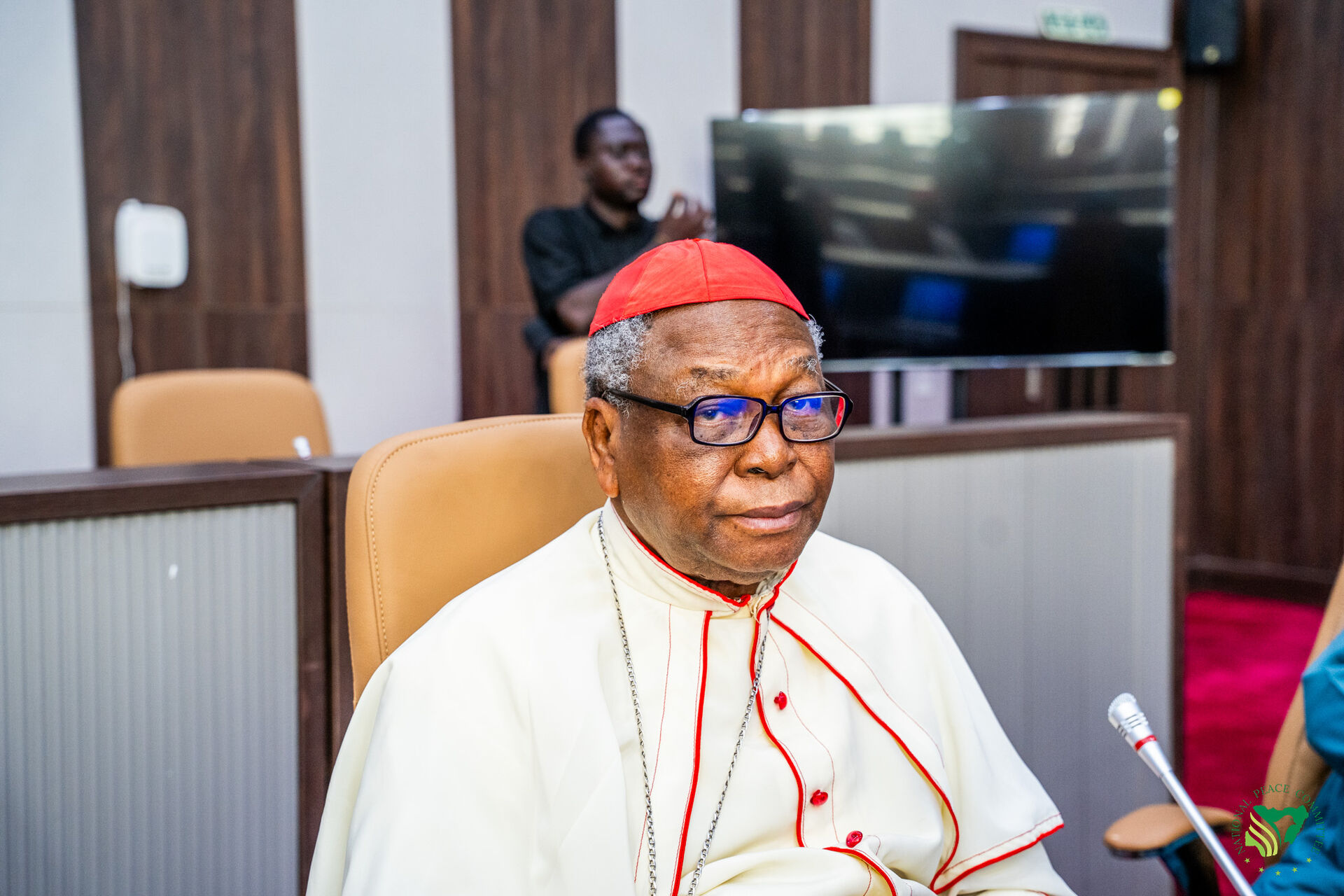
Speaking at the signing ceremony, the Chairman of the National Peace Committee, General Abdulsalami A. Abubakar, GCFR, represented by Gen. Martin Luther Agwai CFR FSS MSS DSS fwc reiterated that the Accord reflects a collective commitment to issue-based campaigns, political tolerance, respect for the rule of law, and the rejection of violence, hate speech, and electoral malpractice.
The Convener of the National Peace Committee, Bishop Matthew Hassan Kukah, CON, also underscored the importance of sustaining dialogue and stakeholder collaboration as critical pillars for democratic stability and peaceful elections, stressing that the electorate holds the power over the politicians.

Building on Months of Stakeholder Engagement
The signing of the Peace Accord was the culmination of weeks of intensive stakeholder engagements conducted by the National Peace Committee across Ekiti State.
Ahead of the event, the Committee convened a series of socialisation meetings and advocacy engagements with political parties, candidates, security agencies under the Inter-Agency Consultative Committee on Election Security (ICCES), media organisations, civil society groups, traditional rulers, religious leaders, and other key electoral stakeholders. These engagements were designed to deepen understanding of the Peace Accord, clarify stakeholder responsibilities, and build consensus around peaceful electoral conduct.
The engagements also provided an opportunity to discuss emerging electoral risks, strengthen coordination among institutions, and reinforce collective ownership of the peacebuilding process ahead of the election.

Strengthening Electoral Integrity Through Early Warning
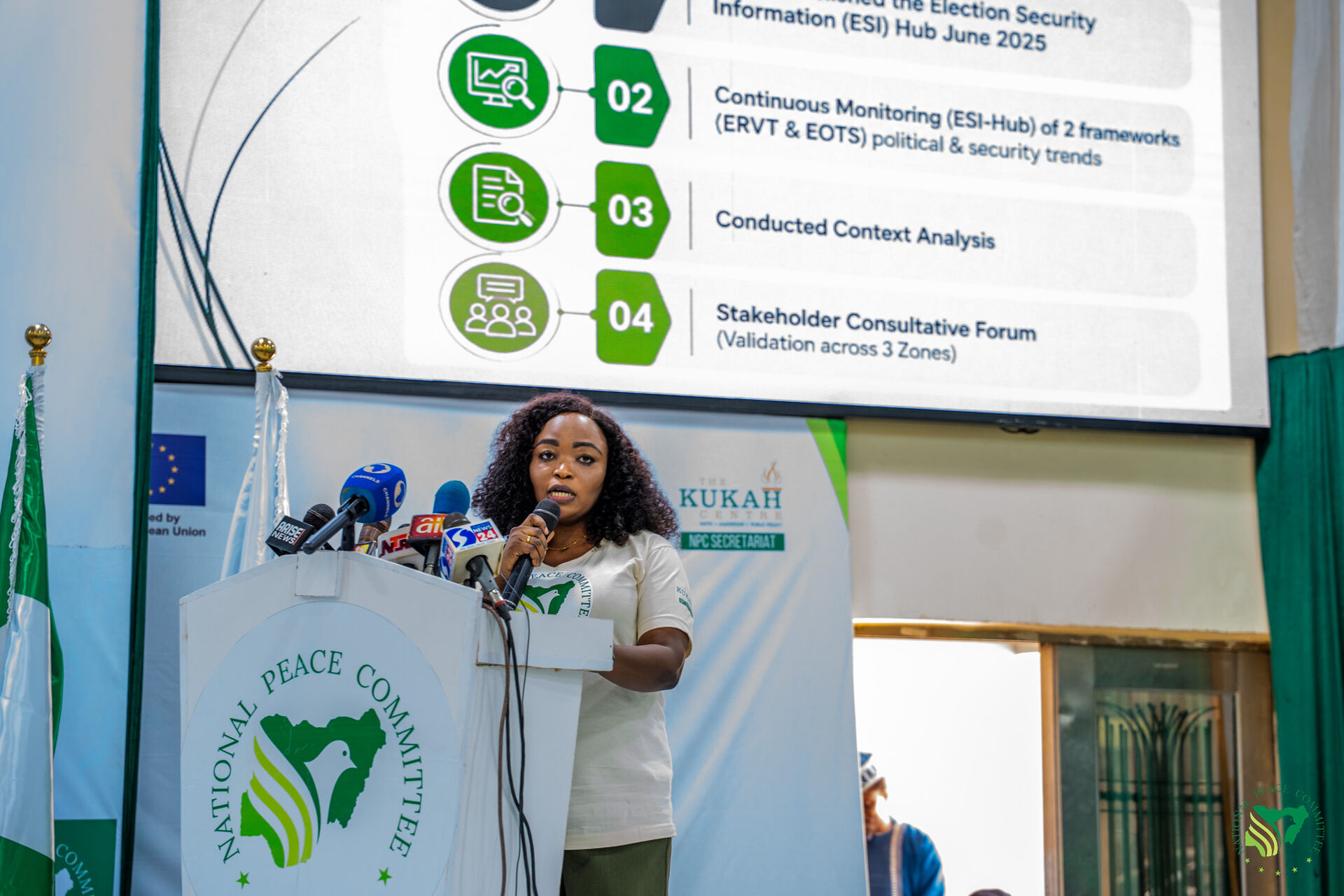
Beyond dialogue and mediation, the National Peace Committee continues to strengthen election security and conflict prevention through the Election Security Information (ESI) Hub.
The ESI Hub serves as a real-time election monitoring and early warning platform that tracks security incidents, compliance concerns, and electoral risk indicators across the country. Through a network of trained field observers, community-based reporting mechanisms, and stakeholder partnerships, the Hub provides timely information that supports preventive action, rapid response, and evidence-based interventions.
In Ekiti State, the ESI Hub has played an important role in identifying emerging risks, informing stakeholder engagements, and supporting the Committee’s broader efforts to promote peaceful elections.
The Peace Accord therefore complements ongoing investments in early warning, conflict prevention, and institutional coordination, ensuring that peacebuilding efforts extend beyond a single event and remain active throughout the electoral cycle.


The signing ceremony attracted high-level participation from electoral and security institutions.
The Independent National Electoral Commission (INEC), led by its Chairman, Professor Joash Amupitan, reaffirmed the Commission’s commitment to conducting a credible election and urged political actors to translate the commitments contained in the Accord into responsible conduct throughout the electoral process.
Similarly, the Inspector-General of Police, Olatunji Disu, psc assured stakeholders of comprehensive security arrangements and collaboration among security agencies to guarantee a peaceful electoral environment before, during, and after the election.
Speaking on behalf of the candidates, His Excellency, Hon. Abiodun Abayomi Oyebanji, also pledged commitment to peaceful campaigns and electoral participation, emphasizing the need to place the interests of Ekiti State above partisan considerations.
Peace as a Shared Responsibility
Ekiti State has long been recognised for its politically aware electorate and vibrant democratic culture. Preserving this legacy requires the collective efforts of citizens, institutions, political actors, security agencies, and community leaders.
The Peace Accord serves as an important reminder that elections should be contests of ideas rather than conflicts between opponents. Democracy flourishes when political competition is guided by respect for the rule of law, tolerance for differing views, and confidence in democratic institutions.
As the June 20 Governorship Election approaches, the National Peace Committee calls on all stakeholders to honour both the letter and spirit of the Peace Accord by conducting themselves peacefully, respecting democratic processes, rejecting violence, and placing the interests of the people above partisan interests.
The Ekiti State Peace Accord is therefore not the end of a process. It is the beginning of a renewed commitment to ensuring that the will of the people is expressed freely, peacefully, and credibly at the ballot box.